
Kenyan Coffee Auctions and Nairobi Cupping Rooms
Kenyan coffee auctions and Nairobi cupping rooms offer travellers an opportunity to understand how some of Africa’s most recognised coffee beans reach international markets. Kenya produces Arabica coffee valued for its lively acidity, distinctive aroma and complex flavours. Nairobi plays an important role in the country’s coffee trade, bringing together producers, brokers, buyers, exporters and professional coffee tasters.
For visitors interested in coffee culture, Nairobi offers experiences beyond ordering a cappuccino at a café. You can learn how coffee is graded, discover the purpose of the Nairobi Coffee Exchange and attend a guided tasting at a participating roastery or coffee training facility.
Understanding the relationship between auctions and cupping helps you appreciate the work involved in producing high-quality Kenyan coffee.
Understanding Kenya’s Coffee Industry
Coffee is an important agricultural crop in Kenya, supporting farmers, cooperatives, processors and businesses involved in international trade.
Much of the country’s Arabica coffee grows in highland areas with suitable rainfall, temperatures and soils.
Important coffee-producing counties include Kiambu, Kirinyaga, Nyeri, Murang’a and Embu.
Farmers cultivate coffee on small farms and larger estates.
After harvesting, coffee cherries undergo processing, drying, milling and grading before reaching buyers.
Main Coffee-Growing Regions
| Coffee region | Location | General characteristics |
|---|---|---|
| Nyeri | Central Kenya | High-altitude Arabica production |
| Kirinyaga | Near Mount Kenya | Established coffee cooperatives |
| Kiambu | Near Nairobi | Historic coffee-growing area |
| Murang’a | Central Kenya | Smallholder farms and estates |
| Embu | Eastern slopes of Mount Kenya | Arabica coffee cultivation |
Coffee quality varies between farms, seasons and processing methods.
What Is the Nairobi Coffee Exchange?
The Nairobi Coffee Exchange is a formal marketplace where Kenyan coffee is offered for sale through an organised auction system.
It brings together licensed participants involved in coffee marketing and purchasing.
The exchange provides a structured process for presenting coffee lots, receiving bids and recording sales.
How Kenyan Coffee Auctions Work
Coffee prepared for sale is organised into identifiable lots.
Each lot represents coffee from a particular source, grade or processing batch.
Samples can be examined and tasted by potential buyers before the auction.
Licensed participants then submit bids through the exchange’s trading arrangements.
Successful sales are recorded, and the coffee proceeds through the applicable payment and delivery processes.
Main Participants in Coffee Auctions
| Participant | Main responsibility |
|---|---|
| Coffee farmers | Grow and harvest coffee cherries |
| Cooperatives | Collect and organise members’ coffee |
| Processing facilities | Prepare coffee for marketing |
| Coffee brokers | Present coffee for auction |
| Licensed buyers | Purchase coffee lots |
| Exporters | Arrange international coffee sales |
| Quality specialists | Assess coffee characteristics |
The auction process involves commercial decisions, quality assessment and market demand.
When Do Nairobi Coffee Auctions Take Place?
Nairobi Coffee Exchange auctions are generally scheduled on Tuesdays, subject to the official trading calendar.
Sessions may change because of public holidays, trading arrangements or other circumstances.
The exchange operates within a regulated commercial environment.
Visitors should not assume that auction sessions are open to the general public.
Direct trading is restricted to authorised participants.
If you are interested in observing an auction, contact the exchange beforehand to ask whether educational visits or observation arrangements are available.
A commercial auction is different from a public coffee-tasting event.
What Are Nairobi Coffee Cupping Rooms?
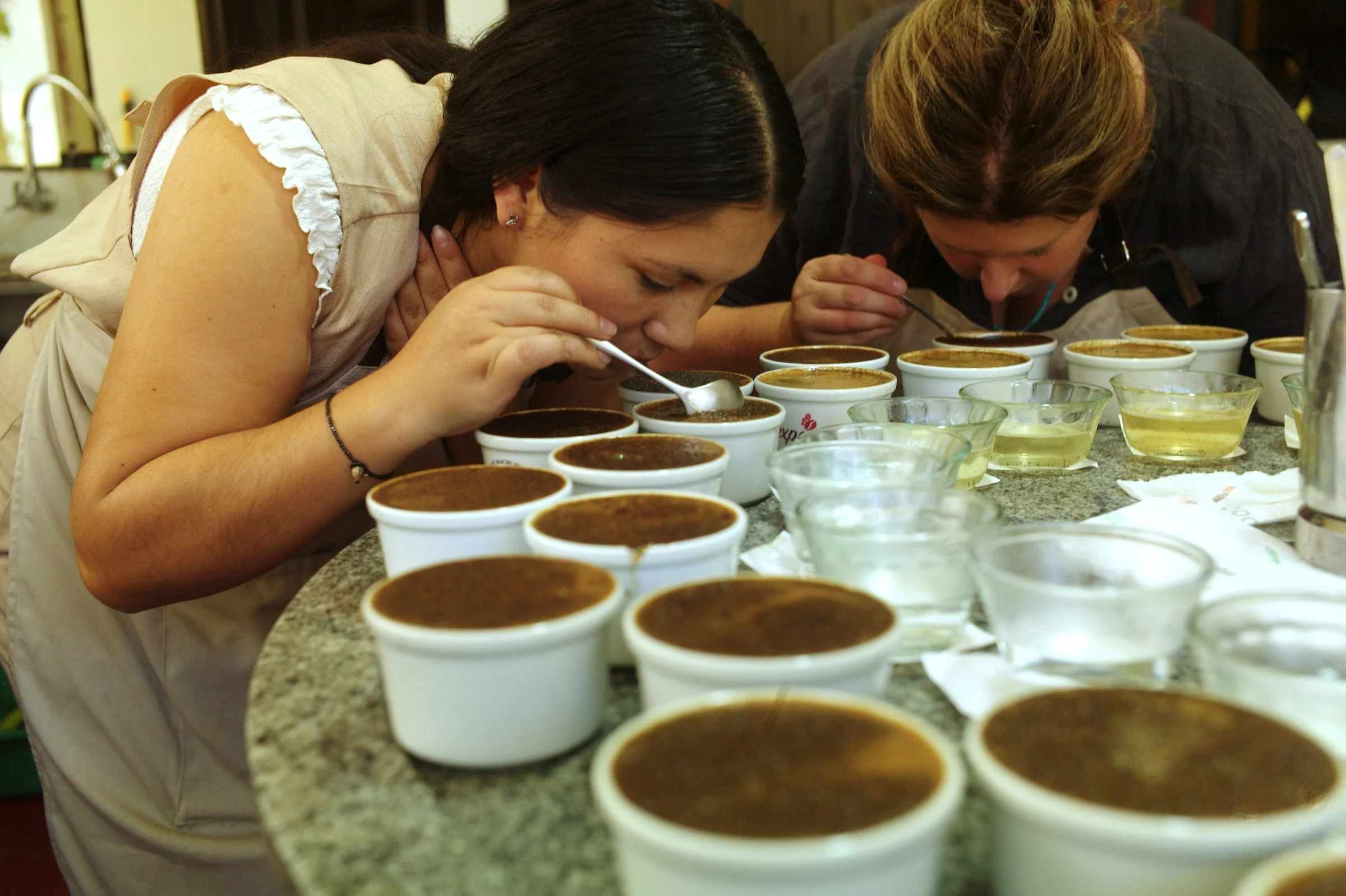
Coffee cupping rooms are facilities used to evaluate coffee samples under controlled conditions.
Coffee buyers, exporters, roasters and quality professionals use these spaces to examine coffee before purchasing or selling it.
A cupping room typically contains tables, sample cups, grinding equipment, weighing scales and tasting utensils.
The objective is to compare different coffees fairly.
What Happens During Coffee Cupping?
A standard tasting follows a structured process.
First, coffee samples are measured and ground.
Participants smell the dry grounds before hot water is added.
After brewing, they assess the aroma and taste the coffee.
Each sample is evaluated for several characteristics.
| Cupping stage | What happens | What visitors learn |
|---|---|---|
| Sample preparation | Coffee is weighed and ground | Consistent preparation |
| Fragrance assessment | Dry grounds are smelled | Initial aromas |
| Brewing | Hot water is added | Flavour extraction |
| Aroma assessment | Coffee surface is disturbed | Released aromas |
| Tasting | Samples are tasted with spoons | Flavour differences |
| Evaluation | Characteristics are discussed | Coffee quality |
A visitor-friendly tasting commonly lasts approximately 30–60 minutes, depending on the organiser.
Understanding Kenyan Coffee Grades
Kenyan coffee is classified into grades during processing.
Common grade names include AA, AB and PB.
These classifications mainly relate to bean size and physical characteristics.
They do not independently guarantee flavour quality.
Kenyan Coffee Grades Explained
| Coffee grade | General description | What to know |
|---|---|---|
| AA | Large, carefully sorted beans | Often marketed as premium coffee |
| AB | Medium-sized beans | Widely available |
| PB | Peaberry beans | Rounded beans containing one developed seed |
| C | Smaller beans | Quality varies |
| E | Very large beans | Sometimes called Elephant grade |
| TT | Lighter beans separated during grading | Variable quality |
A well-produced AB coffee may taste better than a poorly prepared AA coffee.
Professional cupping helps buyers assess the flavour beyond physical grading.
What Makes Kenyan Coffee Taste Different?
Kenyan Arabica coffee is often recognised for its pronounced acidity and fruit-like flavour characteristics.
However, coffee flavour depends on growing conditions, variety, processing and roasting.
Some coffees have citrus notes, while others suggest berries, blackcurrants or caramel.
Common Kenyan Coffee Flavours
| Flavour characteristic | What you may notice |
|---|---|
| Blackcurrant | Dark berry-like taste |
| Citrus | Lemon or orange-like brightness |
| Red berries | Fruity sweetness |
| Floral aroma | Light fragrant qualities |
| Caramel | Gentle sweetness |
| Chocolate | Cocoa-like notes |
These descriptions are examples rather than guaranteed characteristics.
Different coffee lots produce different tasting experiences.
How to Taste Kenyan Coffee Like a Professional
You do not need formal training to enjoy coffee cupping.
Begin by smelling the freshly ground coffee.
Try to recognise familiar aromas.
After brewing, taste a small amount without adding milk or sugar.
Professional tasters often use spoons to draw coffee into their mouths quickly, allowing it to spread across the tongue.
You can taste normally if you prefer.
Understanding Coffee Acidity
Acidity is an important characteristic of many Kenyan coffees.
In coffee tasting, acidity describes a lively sensation that may resemble citrus or fruit.
It does not automatically mean the coffee tastes unpleasantly sour.
Well-balanced acidity can contribute to a refreshing flavour.
Recognising Coffee Body
Body describes how coffee feels in your mouth.
Some coffees feel light and delicate.
Others have a fuller, heavier texture.
Compare several samples to recognise the difference.
Evaluating Aftertaste
Aftertaste refers to flavours that remain after tasting.
A coffee may leave a pleasant sweetness, fruitiness or chocolate-like impression.
Professional tasters consider whether the aftertaste is clean and enjoyable.
Where Can Travellers Experience Coffee Cupping in Nairobi?
Nairobi has speciality coffee roasters, training facilities and businesses involved in coffee quality assessment.
Some offer organised tasting sessions or educational visits.
Others operate primarily as commercial facilities.
Speciality Coffee Roasteries
Roasteries may offer opportunities to learn about bean selection, roasting and brewing.
Some arrange guided tastings for groups.
Ask whether the session includes several coffee origins or focuses specifically on Kenyan beans.
Coffee Training Facilities
Coffee training organisations sometimes provide introductory workshops.
These may cover grinding, brewing methods and sensory evaluation.
A beginner-friendly workshop can be useful if you want a more structured experience.
Professional Cupping Laboratories
Commercial cupping rooms assess coffee for purchasing, quality control and export.
Access may be restricted.
Visitors should request permission rather than arriving without an appointment.
Coffee Auctions Versus Coffee Cupping Experiences
Auctions and cupping rooms serve different purposes.
| Feature | Coffee auction | Coffee cupping |
|---|---|---|
| Main purpose | Commercial coffee trading | Coffee quality assessment |
| Participants | Licensed industry professionals | Professionals or guided visitors |
| Activity | Bidding on coffee lots | Smelling and tasting samples |
| Public access | Usually restricted | Depends on organiser |
| Duration | Depends on trading schedule | Often 30–60 minutes for visitors |
| Best for travellers | Understanding coffee marketing | Learning about flavour |
For most visitors, a guided cupping session is easier to arrange than attending a professional auction.
How Much Does Coffee Cupping Cost in Nairobi?
Coffee tasting prices vary depending on the organiser.
A short introductory session may cost less than a detailed workshop led by a professional trainer.
Private sessions may carry additional charges.
Before booking, ask what the advertised price includes.
Confirm whether you will taste several coffees, receive an explanation of grading or observe roasting.
Some experiences also include coffee to take home.
There is no standard price for all Nairobi cupping sessions.
Combining Coffee Experiences With Nairobi Attractions
A coffee-focused visit can fit into a wider Nairobi itinerary.
You could arrange a morning tasting session before spending the afternoon exploring the city.
Travellers interested in Kenyan culture may also visit museums, local markets or other attractions.
Sample Half-Day Coffee Experience
| Time | Suggested activity |
|---|---|
| 9:00 am | Introduction to Kenyan coffee |
| 9:30 am | Learn about coffee grades |
| 10:00 am | Guided cupping session |
| 11:00 am | Roasting or brewing demonstration |
| Noon | Coffee purchase and lunch |
This is an illustrative schedule, not a confirmed tour.
Actual programmes depend on the provider.
Buying Kenyan Coffee After Your Tasting
Many travellers purchase roasted Kenyan coffee to take home.
Look for packaging that identifies the origin, roast date and processing method.
Coffee labelled AA or AB provides information about grading, but you should also consider freshness and flavour.
Whole beans generally preserve their qualities longer than pre-ground coffee when stored correctly.
Choose sealed packaging and avoid exposing coffee to excessive heat or moisture.
If travelling internationally, check your destination’s rules for carrying agricultural products.
Coffee Tourism and Kenyan Farmers
Coffee tourism can help visitors understand the work behind coffee production.
Farmers invest considerable effort in planting, harvesting and maintaining coffee trees.
Processing facilities and cooperatives also contribute to preparing coffee for market.
Educational visits can introduce travellers to these different stages.
Where possible, choose experiences that explain how producers are paid and how coffee reaches buyers.
This provides a fuller understanding of Kenya’s coffee industry.
Kenyan coffee auctions and Nairobi cupping rooms reveal the processes involved in bringing Kenyan coffee to international markets.
The Nairobi Coffee Exchange provides an organised commercial trading system, while cupping rooms help professionals evaluate flavour and quality.
For travellers, guided coffee tastings offer an accessible introduction to this important industry.
Whether you are interested in coffee production, roasting or simply enjoying a well-prepared cup, a Nairobi coffee experience can add something different to your Kenya safari.



No comment