
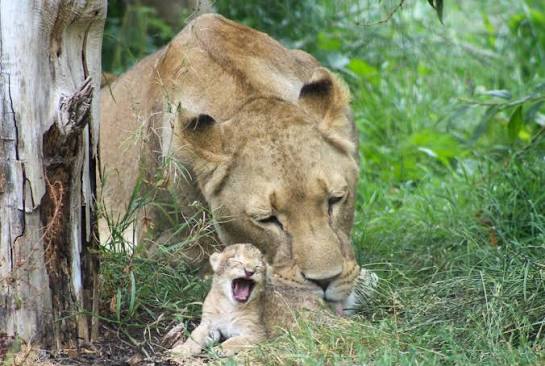
Lion Cubs in Their First Year
A lioness emerges from the tall grass of Tanzania’s Serengeti National Park, followed by three small cubs. One stops to investigate a fallen branch, another jumps playfully towards its sibling, and the third stays close to its mother’s legs. Although they appear carefree, these young lions are beginning one of the most challenging periods of their lives.
Understanding lion cub development in the first year reveals how young lions grow from vulnerable newborns into increasingly confident members of a pride. During their first twelve months, cubs learn to walk, play, eat meat, recognise other lions and develop the skills they will eventually need for hunting.
However, survival is far from guaranteed. Food shortages, disease, dangerous predators and changes in pride leadership can threaten young lions.
For safari travellers, observing cubs at different ages provides fascinating insights into lion family life and the importance of protecting healthy wildlife habitats.
1. What Happens When Lion Cubs Are Born?
Female lions usually give birth in secluded places away from the main pride.
A sheltered area among thick bushes, rocks or tall grass provides protection during the earliest weeks.
A typical litter contains two to four cubs, although smaller and larger litters occur.
Newborn lion cubs weigh around 1–2 kilograms and are almost completely dependent on their mothers.
Their coats are often marked with faint spots that may fade as they mature.
At birth, cubs have limited mobility and cannot follow adults across the savannah.
Their mother provides warmth, milk and protection.
2. The First Month: Hidden and Vulnerable
During their first weeks, lion cubs remain close to their birthplace.
Their eyes open at birth or shortly afterwards, but their vision and coordination are still developing.
By approximately three weeks, cubs can walk more steadily.
They begin exploring their immediate surroundings while remaining dependent on their mother.
Why Does the Mother Hide Them?
Young cubs are vulnerable to predators and other dangers.
A secluded location helps reduce unwanted attention.
The lioness may leave briefly to hunt, returning to nurse her offspring.
She can also move the cubs between hiding places when necessary.
Safari visitors should never approach a suspected lion den because disturbance may disrupt maternal care.
3. Months Two and Three: Meeting the Pride
At approximately four to eight weeks, a lioness may introduce her cubs to the wider pride.
This is an important stage in social development.
Youngsters begin interacting with other lionesses, older cubs and resident males.
They may greet adults, play with siblings and explore their surroundings.
Some lionesses raise cubs of similar ages together.
What Is a Lion Crèche?
A crèche is a group of cubs cared for within a pride by related females.
Lionesses may nurse their own young and sometimes the cubs of other females.
This cooperative arrangement can provide social and protective advantages.
However, competition between cubs can still occur, particularly when food is limited.
4. When Do Lion Cubs Start Eating Meat?
Lion cubs depend on milk during their earliest weeks.
They generally begin sampling meat when they are several weeks old.
As their teeth develop, they become increasingly interested in carcasses brought down by adults.
However, drinking milk continues for several months.
Weaning is gradual and commonly completed by approximately six to eight months, although timing varies.
Feeding Development
| Age | Typical Feeding Behaviour |
|---|---|
| Birth–1 month | Almost entirely dependent on milk |
| 1–2 months | Begins exploring and may sample meat |
| 3–4 months | Increasing interest in meat |
| 5–6 months | Meat becomes increasingly important |
| 7–8 months | Often approaching or completing weaning |
| 9–12 months | Depends on meat supplied by successful hunters |
A one-year-old lion is not normally capable of surviving independently through successful hunting.
5. Why Do Lion Cubs Play So Much?
Play is one of the most noticeable behaviours among young lions.
Cubs chase one another, wrestle, bite gently and practise pouncing.
These activities help develop muscles, balance and coordination.
Play also provides opportunities to learn social behaviour.
For example, a cub may discover how other lions respond to rough contact or competition.
Common Cub Activities
- Chasing siblings.
- Wrestling and rolling.
- Stalking moving tails.
- Pouncing on grass or branches.
- Climbing low rocks.
- Practising short bursts of running.
Although these activities resemble hunting, a playful cub is not necessarily practising a complete hunting strategy.
Its coordination and strength are still developing.
6. Months Four to Six: Becoming More Adventurous
As lion cubs grow stronger, they become more willing to explore.
They may follow adult lionesses over increasing distances.
Their teeth develop further, allowing them to eat more meat.
Young lions may also begin observing how adults approach prey.
However, they remain vulnerable and still depend on the pride for food and security.
A cub wandering too far from its mother may face danger from other predators or unfamiliar lions.
This is why adults sometimes retrieve or call young cubs back towards the group.
7. Why Lion Cubs Depend on Their Mothers
A lioness provides more than milk.
She protects her cubs, maintains contact with them and helps them gain access to food.
Mothers communicate with young through calls, grooming and physical contact.
When cubs become separated, vocalisations may help them locate one another.
Lionesses also guide cubs towards carcasses when it is appropriate for them to feed.
In a pride, related females can provide additional protection.
However, parental care does not eliminate every danger.
8. Do Male Lions Protect Their Cubs?
Resident male lions can contribute indirectly to cub survival.
Their presence may discourage rival males from entering the pride’s territory.
Males may also confront threats to the group.
However, not every male interacts with cubs in the same way.
Some tolerate youngsters climbing over them or resting nearby, while others respond less patiently.
Adult males do not usually perform the same daily childcare duties as lionesses.
Their most important contribution often involves defending access to territory and reproductive opportunities.
9. Why Do So Many Lion Cubs Die Young?
The first year is a particularly vulnerable period.
Historical Serengeti research documented high mortality among young cubs, with survival varying substantially between habitats and populations.
The main threats include food shortages, disease, accidents and attacks by other animals.
Changes in pride leadership can also be dangerous.
Major Threats to Lion Cubs
| Threat | Why It Matters |
|---|---|
| Food shortages | Cubs may not receive enough nutrition |
| Disease | Young animals can be vulnerable to infections |
| Male takeovers | Incoming males may kill dependent cubs |
| Other predators | Hyenas and other carnivores may threaten unattended cubs |
| Injuries | Youngsters can be hurt during movement or feeding |
| Loss of their mother | Cubs may lose essential protection and food |
Mortality figures should not be treated as identical across all African lion populations.
10. Why Male Lion Takeovers Are Dangerous
Male lions sometimes challenge resident males for control of a pride.
When new males gain control, they may kill young cubs fathered by previous males.
This behaviour is called infanticide.
It can cause females to become reproductively receptive sooner.
However, infanticide does not happen during every takeover.
The outcome depends on several factors, including cub age and the relationships between the animals involved.
Lionesses sometimes attempt to defend their young or move them away from danger.
11. Months Seven to Nine: Learning From Adults
By this stage, cubs have become stronger and more mobile.
They increasingly accompany pride members across their home range.
They may watch adult lions stalking prey or feeding at a carcass.
Youngsters sometimes chase small moving animals, although these attempts rarely resemble the hunting ability of mature lions.
Social interactions remain important.
Through everyday experiences, cubs gradually learn which individuals belong to their pride and how to behave around adults.
12. Months Ten to Twelve: Growing Into Young Lions
Towards their first birthday, lion cubs look noticeably different from newborns.
Their bodies are larger, their movements are more coordinated and their dependence on milk has usually ended.
They may take part in short chases or investigate prey during adult hunts.
However, they still rely heavily on experienced pride members.
Development During the First Year
| Age | Important Milestone |
|---|---|
| Newborn | Hidden and dependent |
| 1 month | Better walking and coordination |
| 2–3 months | Increasing social interaction |
| 4–6 months | Greater mobility and meat consumption |
| 7–9 months | More time accompanying the pride |
| 10–12 months | Improved coordination and hunting-related behaviour |
Development differs between individual cubs and prides.
Reaching one year is an important milestone, not the end of childhood.
13. When Do Lion Cubs Become Independent?
Lion cubs do not become fully independent at twelve months.
Young lions usually remain associated with their pride for several years.
Females often stay within their birth pride or its social network.
Young males generally leave or are displaced as they approach maturity.
These changes commonly occur well after the first year.
Successful hunting and independent survival require further physical and behavioural development.
14. Where Can You See Lion Cubs in East Africa?
Several East African parks provide opportunities to observe lion family behaviour.
| Destination | Country | Lion Viewing Opportunities |
|---|---|---|
| Serengeti National Park | Tanzania | Resident prides across savannah habitats |
| Maasai Mara National Reserve | Kenya | Lionesses and cubs in established prides |
| Ngorongoro Crater | Tanzania | Lions in open grassland |
| Queen Elizabeth National Park | Uganda | Lions in Kasenyi and Ishasha |
| Murchison Falls National Park | Uganda | Savannah lion populations |
| Kidepo Valley National Park | Uganda | Lions in remote grasslands |
Lion cub sightings depend on breeding patterns, pride movements and local conditions.
No particular month guarantees the presence of newborn cubs.
15. How to Watch Lion Cubs Responsibly
Young cubs are particularly sensitive to disturbance.
Safari vehicles should never surround lion families or block their movements.
Approaching a hidden den can interfere with a mother’s care.
When cubs are present:
- Maintain a suitable viewing distance.
- Remain inside your safari vehicle.
- Avoid loud noises and sudden movements.
- Never encourage cubs to approach.
- Do not interfere with feeding.
- Follow your guide’s instructions.
- Leave if the animals show signs of disturbance.
Patient observation often provides better opportunities to understand natural behaviour.
The Remarkable First Year of a Lion Cub
Lion cubs experience extraordinary changes during their first twelve months.
They begin life hidden and dependent, gradually developing the strength, coordination and social abilities needed to survive within a pride.
Their mothers provide essential care, while cooperation between pride members can improve their chances.
Yet dangers such as food shortages, disease and male takeovers make their early lives uncertain.
For safari visitors, watching lion cubs grow provides a memorable introduction to the complexities of African wildlife.


No comment