
The Maasai Mara Conservancies: Why They Beat the Main Reserve
Fifty vehicles crowded around a single lion sighting isn’t an exaggeration during peak season in the main Maasai Mara National Reserve, it’s a genuine, commonly reported experience. The ring of private conservancies surrounding the reserve offers a fundamentally different way to experience the same ecosystem: strict vehicle limits, off-road access and considerably more wildlife per visitor, at the cost of a higher nightly rate.
Key Highlights
- The main Mara Reserve can see 50 or more vehicles at a single popular sighting during peak season
- Conservancies typically limit sightings to just two to six vehicles
- Off-road driving is prohibited in the main reserve but permitted in most conservancies
- Conservancies allow night drives and walking safaris, both unavailable in the reserve itself
- Conservancy access is exclusive to guests staying at camps within that specific conservancy
- Conservancies generally command higher nightly rates, reflecting their lower visitor density and expanded activities
Vehicle Crowding: The Single Biggest Difference
The most immediately noticeable difference between the main reserve and its surrounding conservancies is sheer vehicle density at any given wildlife sighting. During peak season, popular sightings inside the main Mara Reserve routinely draw 50 or more vehicles, a scene that can feel considerably more like a traffic jam than a wilderness encounter. Conservancies, by contrast, typically cap sightings at just two to six vehicles, maintained through strict, enforced visitor limits tied directly to each conservancy’s acreage and bed capacity.
Why This Limit Exists and How It’s Enforced
Conservancies deliberately cap the number of beds available within their boundaries relative to total acreage, a structural limit that directly controls how many vehicles can possibly be in the field at any given time, a fundamentally different management philosophy than the main reserve’s more open access model.
Off-Road Driving: Getting Closer to the Action
Off-road driving is prohibited within the main Mara Reserve, meaning a sighting even 50 metres off a designated track must be observed from a distance, often through binoculars rather than up close. Most conservancies permit off-road driving, allowing guides to position vehicles considerably closer to unfolding wildlife behaviour, a genuinely significant difference for photography and simply the visceral experience of proximity to wildlife.
What This Means in Practice
A cheetah hunt or a pride of lions resting just off a conservancy’s track becomes a close, detailed viewing opportunity rather than a distant silhouette, a difference that repeatedly ranks among the most commonly cited reasons experienced Mara visitors specifically choose conservancy-based stays over the main reserve.
Night Drives and Walking Safaris
Beyond off-road access, conservancies permit night drives and guided walking safaris, both activities unavailable inside the main reserve’s stricter regulatory framework. Night drives reveal an entirely different set of nocturnal and crepuscular species, while walking safaris offer a genuinely different, slower-paced way to engage with the Mara ecosystem than any vehicle-based activity can replicate.
A Fuller Range of Safari Experiences
This expanded activity range means a conservancy-based stay can deliver meaningfully more variety across a multi-day visit than the main reserve alone, standard game drives, night drives and walking safaris all available within a single base rather than requiring a change of location.
Exclusivity: Who Can Actually Visit
Access to a specific conservancy is generally restricted to guests staying at camps located within that conservancy’s boundaries, a structural exclusivity that directly sustains the low vehicle density conservancies are known for. This differs fundamentally from the main reserve, where day visitors and guests from a wide range of outside lodges can all enter and share the same wildlife-viewing space regardless of where they’re actually staying.
Why This Exclusivity Is the Whole Point
This restricted access isn’t simply a marketing feature but the structural mechanism making everything else about the conservancy experience possible, low vehicle density, off-road access, expanded activities, none of which would remain sustainable without limiting overall visitor numbers relative to available land.
The Tradeoff: Higher Cost for a Different Experience
Conservancies generally command meaningfully higher nightly rates than comparable main reserve lodges, a premium directly reflecting their lower visitor density, expanded activity range and the conservation and community-benefit funding structures most conservancies operate under. This isn’t simply a luxury markup; a portion of conservancy fees typically funds both wildlife conservation and direct community benefit programmes for the Maasai landowners whose land forms the conservancy itself.
Is the Premium Worth It?
For travellers prioritising an intimate, uncrowded wildlife experience with genuine off-road access over simply the lowest possible nightly rate, conservancies offer clearly superior value on those specific terms; travellers purely optimising for lowest cost per night may still find the main reserve’s more affordable lodges a reasonable choice, provided they accept the tradeoff in crowding and activity restrictions.
Wildlife: Broadly the Same Ecosystem
Wildlife moves freely between the main reserve and surrounding conservancies as part of a single connected ecosystem, meaning species diversity and general sighting quality remain broadly comparable between the two; the meaningful difference lies in how you experience that wildlife, not fundamentally which animals you’re likely to see.
Choosing Between the Reserve and a Conservancy
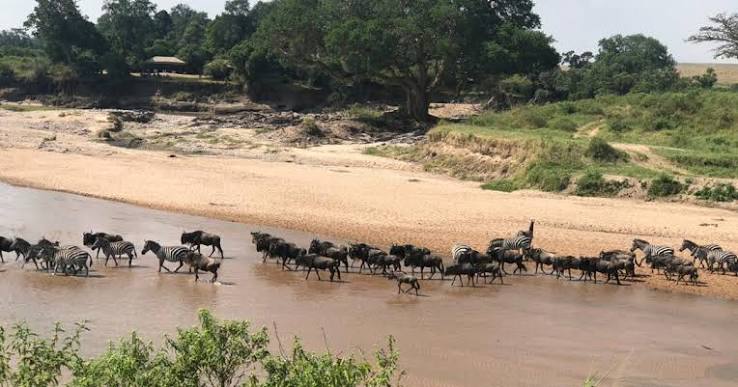
Many experienced Mara travellers ultimately recommend combining both, a stay in a conservancy for the exclusivity and expanded activities, paired with time in the main reserve specifically during migration season when the reserve’s river crossing points offer unmatched access to that particular spectacle regardless of crowding.
How Conservancy Land Is Owned and Managed
Maasai Mara conservancies operate on land leased directly from individual Maasai landowners, a structural arrangement fundamentally different from the government-managed main reserve, where local communities receive direct, ongoing lease payments funded by tourism operators in exchange for dedicating their land to wildlife conservation rather than agriculture or settlement. This model gives Maasai landowners a genuine, sustained economic stake in conservation outcomes, a meaningfully different relationship between local communities and tourism revenue than the main reserve’s more centralised government fee structure provides.
Why This Ownership Model Matters
Understanding this lease-based ownership structure helps explain why conservancies have become such effective conservation tools, individual landowners have direct, tangible financial incentive to maintain their land for wildlife rather than converting it to alternative uses, aligning conservation outcomes with local economic interest in a way that’s proven genuinely durable across multiple conservancies over recent decades.
Choosing the Right Conservancy for Your Stay
Several distinct conservancies ring the main Mara Reserve, Mara North, Olare Motorogi, Naboisho and Mara Triangle among the better known, each with its own specific size, wildlife character and camp density, meaning the choice of which particular conservancy to base yourself in genuinely matters beyond the general reserve-versus-conservancy decision. Working with a knowledgeable operator to match a specific conservancy’s strengths, predator density, scenic character, camp style, to your own priorities meaningfully improves the value of the premium you’re paying over a standard main reserve stay.
Researching Before You Book
Reading recent, specific reviews for a particular conservancy and camp, rather than relying on general “Mara conservancy” marketing language, helps set realistic, accurate expectations for what any given stay will actually deliver.
Cultural Engagement Opportunities
Given their direct lease-based relationship with Maasai landowning communities, many conservancies offer genuine, well-structured cultural visits and village engagement alongside standard wildlife activities, an opportunity to understand the human dimension behind the conservation model directly from the communities sustaining it. This cultural layer is generally more deeply integrated into the conservancy experience than a typical main reserve stay offers, reflecting the conservancy model’s fundamentally community-centred structure.
Approaching Cultural Visits Thoughtfully
As with any cultural tourism activity, approaching a conservancy’s community visit with genuine curiosity and respect, rather than treating it as simply another checklist item, considerably improves the experience for both visitors and the host community.
Booking Logistics and Timing
Given their limited bed capacity, conservancy camps can sell out considerably further in advance than comparable main reserve lodges, particularly around peak July-to-October migration months, making early booking genuinely important for travellers specifically set on a conservancy stay during that window. Travellers with more flexible dates or travelling outside peak season generally find conservancy availability considerably easier to secure, alongside the added benefit of lower overall pricing during quieter months.
A Genuinely Different Pace of Safari
Beyond the specific logistical advantages, conservancy stays fundamentally change the rhythm of a safari day, guides have real freedom to linger at a compelling sighting, adjust plans around unfolding wildlife behaviour, or simply slow down rather than racing between vehicles to a reported sighting before it disappears amid a crowd. Travellers who’ve found the main reserve’s peak-season pace feeling rushed or overly competitive often describe a conservancy stay as feeling like an entirely different kind of safari, even while covering fundamentally the same ecosystem and wildlife.
Frequently Asked Questions
Are conservancies actually part of the Maasai Mara ecosystem?
Yes, conservancies surround the main reserve and share the same broader ecosystem, with wildlife moving freely between the two areas.
Why are conservancy stays more expensive than main reserve lodges?
Higher rates reflect lower visitor density, expanded activity options, and funding structures that support both conservation and direct community benefit for local Maasai landowners.
Can I visit a conservancy without staying at a camp there?
Generally no, access is typically restricted to guests staying within that specific conservancy’s boundaries.
Should I choose a conservancy or the main reserve for migration season?
Many experienced travellers combine both, using the main reserve specifically for river crossing access and a conservancy for the broader, less crowded safari experience.
Do conservancies offer the same wildlife density as the main reserve?
Broadly yes, given the shared ecosystem, though conservancies offer considerably better viewing conditions given their lower vehicle density and off-road access.
Recommended Safaris
Combining a Mara conservancy stay with time in the main reserve offers the fullest picture of this iconic ecosystem. Ready to plan a Maasai Mara safari matched to your priorities? Reach our team through our Book Now page and we’ll plan it around your dates.

No comment