Bungee Jumping Over the Nile: Height, Fear and What to Expect
Jinja, Uganda, is many things to many travellers. For some, it marks the source of the world’s longest river. For others, it is a quiet town where the Nile begins its 6,650-kilometre journey to the Mediterranean. But for a growing number of adventurers, Jinja represents something else entirely. It is the place where they confront their deepest fears, suspended 44 metres above the water with nothing but a cord and a leap of faith.
Bungee jumping over the Nile has become one of East Africa’s most iconic experiences, drawing thousands of visitors each year who come to test their limits in one of the most stunning settings on the continent.
The Numbers That Matter
The platform stands 44 metres above the river, roughly 145 feet. To put that into perspective, it is the height of an eleven-storey building. When you are standing at the top, looking down at the water, that number takes on a different meaning entirely. It is high enough to feel terrifying, but not so high that the experience becomes abstract. You can see the water clearly, the retrieval boat bobbing below, every ripple and shadow.
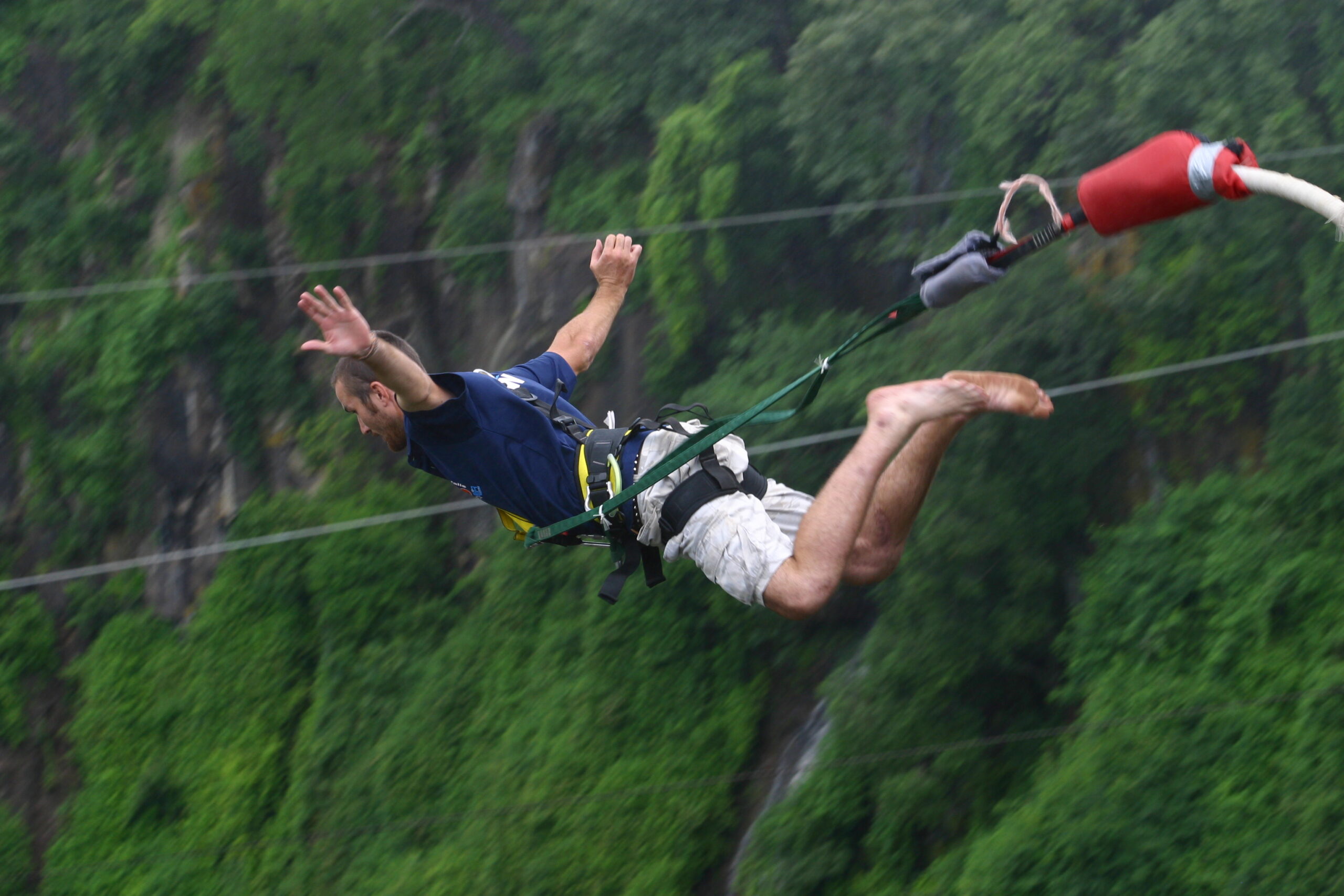
The jump offers a few seconds of freefall before the cord catches and rebounds. Depending on your weight and the type of jump you choose, you may dip into the water itself in what is known as the “long jump.” For those who prefer a less intense experience, the “body jump” stops you midway, giving you the thrill without the splash.
For foreign tourists, the jump costs approximately $115. East African residents pay around $100, while Ugandan citizens are charged UGX 200,000. The photos and video package costs an additional $10 and is well worth the investment.
The weight limit is between 35 and 110 kilograms. Your weight determines the cord used, with yellow, blue, or red cords assigned to different ranges. The minimum age is 13, and anyone under 18 requires parental consent.
Ankle Dive or Body Jump
One of the first decisions you will make is which type of jump to attempt. The ankle dive has your feet harnessed together as you leap headfirst. This is the classic bungee experience, allowing for the full range of motion and the possibility of touching the water.
The body jump uses a waist harness and stops you well above the water, making it a better choice for nervous first-timers. Both jumps are perfectly safe, and the staff will guide you towards the option that best suits your comfort level.
The Psychology of the Platform
Let us talk about fear, because that is really what this experience is about. The height is just a number. The cord is just equipment. The real challenge is the moment when you stand at the edge and every instinct tells you to step back.
This is not cowardice. It is biology. Your brain is designed to keep you alive, and jumping off a high platform is not something it recognises as safe. Even the most experienced jumpers feel it. The difference is that they have learned to acknowledge the fear and move past it.
The instructors understand this better than anyone. They have watched thousands of people stand at that edge, trembling and uncertain. They do not judge. They will talk you through it, guide your breathing, and remind you that the equipment has been tested and inspected.
Their advice is simple: look at the horizon, not at the water. Take slow, deep breaths. Do not overthink. When the countdown begins, lean forward instead of jumping. Leaning is gentler and more controlled than a sudden leap.
Some people freeze. It happens more often than you might think. The staff will unhook them calmly and escort them back down. There is no pressure, no mockery, no judgment. The jump will always be there tomorrow.
And sometimes, the people who freeze come back. They watch a few other jumps, feel the pull of the challenge, and an hour later they are back at the top, stepping off into the void.
The Moment of Impact
When you finally jump, the experience defies description. The first second is pure sensation. The wind roars in your ears. The world blurs past you. The river rushes up faster than you thought possible.
Then the cord catches. For a brief, terrifying moment, you feel the sudden stop that yanks you back upward. It is jarring and exhilarating at the same time.
And then you bounce. Up and down, swinging gently like a pendulum. The roar of the wind fades. The noise from the shore becomes distant. You hang there, suspended above the longest river in the world, and everything goes quiet.
This is the part nobody warns you about. The peace. The quiet. The strange, unexpected calm that settles over you. No worries, no regrets, no mental chatter. Just you, the river, and the realisation that you actually did it.
The retrieval boat arrives within a couple of minutes. A staff member reaches up, unclips you, and helps you into the boat. Your legs are shaky. Your heart is still racing. But you are grinning so wide it hurts.
Safety and Practical Advice
The equipment is ISO certified and meets stringent international standards. The bungee cords are made from thousands of strands of high-grade latex rubber, designed to stretch and recoil within safe limits. Each instructor completes a minimum of 300 supervised jumps before working independently.
However, certain conditions disqualify you from jumping. High blood pressure, heart conditions, epilepsy, and pregnancy are automatic exclusions. The staff will not take risks with your health.
If you are planning to jump, book ahead, especially on weekends. Wear comfortable, non-restrictive clothing and closed-toe shoes. Avoid loose jewellery. Do not eat a heavy meal beforehand. Bring extra cash for the photo and video package. And give yourself time to breathe. The nerves will hit hardest in the moments before the jump.
The Verdict
Bungee jumping over the Nile is not for everyone. Some people will look at the height and walk away, perfectly content to watch from the shore. That is okay. The experience is deeply personal, and there is no right or wrong answer.
But for those who do take the leap, the reward is immeasurable. It is not the adrenaline, though that is certainly part of it. It is not the view, though the view is spectacular. It is the quiet, private moment of triumph that comes after you have done something you were terrified to do.
You will stand at that edge, look down at the water, feel your heart pounding. And then you will lean forward, let go, and discover that you can fly.