Gorilla Silverback Males: How They Lead, Fight & Protect Their Family
The silverback gorilla is the undisputed leader of the mountain gorilla family, a powerful figure whose presence defines the survival and stability of the entire troop. Found in the dense forests of Bwindi Impenetrable National Park and Mgahinga Gorilla National Park, these dominant males are not only physically imposing but also socially intelligent and deeply protective.
Understanding the role of a silverback gorilla reveals the complexity of gorilla society. Far from being aggressive animals, silverbacks are strategic leaders who balance strength with calm authority. Their daily responsibilities include guiding the group, resolving conflicts, protecting members from danger, and ensuring the survival of future generations.
What Is a Silverback Gorilla?
A silverback is an adult male mountain gorilla that has reached full maturity. Typically over the age of 12, these males develop a distinctive patch of silver hair across their back, which gives them their name. Along with this physical change comes increased strength, confidence, and leadership responsibility.
Silverbacks are significantly larger than females and younger males, with powerful builds that enable them to defend their group against threats. However, their role extends far beyond physical dominance—they are the central decision-makers and protectors of the family.
Leadership and Decision-Making
The silverback is the leader and guide of the gorilla family. Every day, he determines where the group will move, feed, and rest. His decisions are based on knowledge of the forest, availability of food, and the safety of the troop.
This leadership is not enforced through constant aggression but through respect and trust. Other members of the group follow the silverback willingly, relying on his experience and judgment. His calm presence creates stability, allowing the group to function as a cohesive unit.
Protecting the Family from Threats
Protection is one of the silverback’s most critical roles. He constantly monitors the surroundings for potential dangers, including predators, rival gorilla groups, and human threats.
When danger is detected, the silverback positions himself between the threat and the rest of the group. Females and young gorillas move behind him, relying on his strength and courage for safety. This protective instinct is deeply ingrained and essential for the survival of the troop.
Even in the absence of immediate threats, the silverback remains alert, ensuring that the group can respond quickly to any changes in the environment.
How Silverbacks Fight and Defend Territory
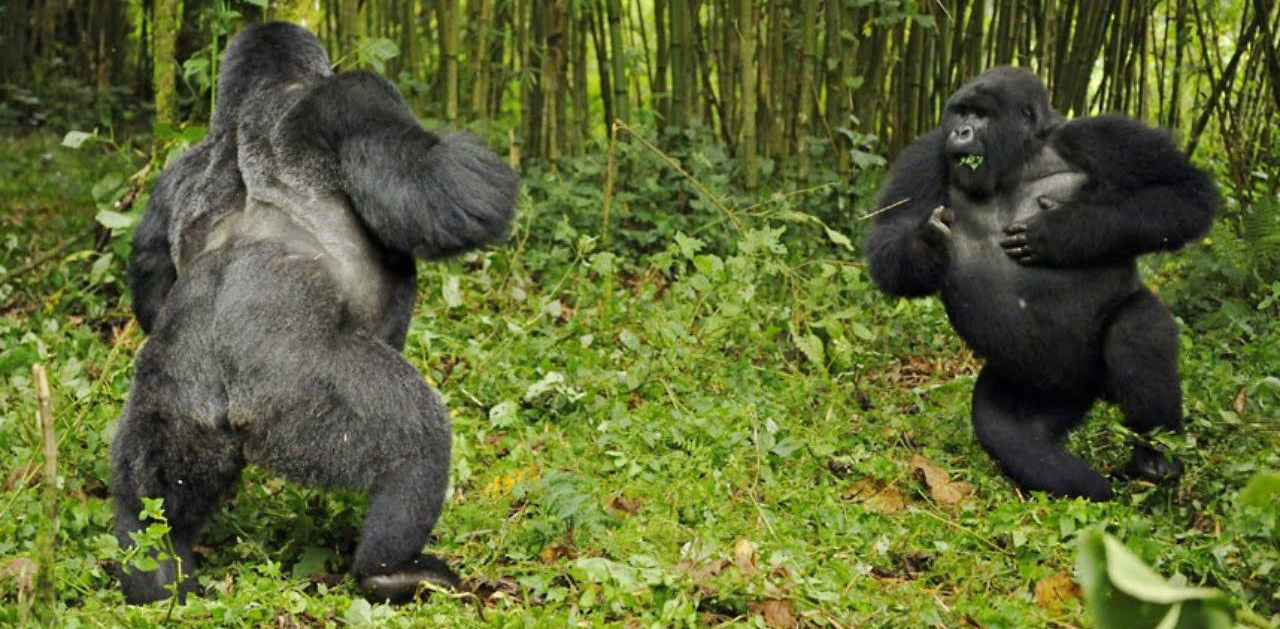
Fighting among silverbacks is rare but powerful when it occurs. Most conflicts begin with displays rather than physical combat. A silverback may stand upright, beat his chest, roar, and charge to intimidate a rival.
These displays are often enough to resolve disputes without injury. However, if neither male backs down, physical fights can occur. These encounters involve biting, grappling, and immense physical force, as each silverback attempts to assert dominance.
Territorial disputes usually arise when groups overlap or when a lone male attempts to take over a family. Despite the intensity of these confrontations, they are relatively infrequent, as gorillas generally avoid unnecessary conflict.
Social Bonds and Family Structure
The silverback is the center of the gorilla family’s social structure. His relationship with females is based on trust and protection, while his interactions with juveniles often show surprising gentleness.
Young gorillas frequently play near the silverback, climbing on him or engaging in playful behavior. He tolerates and even encourages these interactions, reinforcing social bonds within the group. This balance of strength and gentleness is a defining characteristic of effective leadership.
The silverback also mediates conflicts within the group, stepping in when tensions arise and maintaining harmony among members.
The Role of Blackbacks and Future Leaders
Not all male gorillas become immediate leaders. Younger adult males, known as blackbacks, remain within the group under the guidance of the dominant silverback. These individuals learn leadership skills, social behavior, and survival strategies over time.
As they mature, blackbacks may leave the group to form their own families or challenge an existing silverback for leadership. This transition ensures the continuation of gorilla social structures and the spread of genetic diversity.
Emotional Intelligence and Communication
Silverbacks display remarkable emotional intelligence. They communicate through vocalizations, body language, and subtle gestures that convey mood, intention, and authority.
Chest-beating, for example, is not just a display of strength but also a form of communication that can signal dominance or deter rivals. Gentle grunts and movements reassure group members and maintain cohesion.
This ability to communicate effectively strengthens the silverback’s role as both leader and protector, ensuring that the group functions smoothly.
Why Silverbacks Are Essential for Survival
The presence of a strong silverback is crucial for the survival of a gorilla family. Without a dominant leader, groups become vulnerable to external threats and internal instability. Infants are particularly at risk during periods of leadership transition.
A stable silverback ensures consistent protection, organized movement, and social harmony. His role is not only to defend the group but also to guide it toward long-term survival.
Strength, Leadership, and Responsibility
The silverback gorilla represents the heart of mountain gorilla society. Through strength, intelligence, and leadership, he ensures the safety and cohesion of his family in one of the world’s most challenging environments.
Observing a silverback in the wild is one of the most powerful moments in any gorilla trekking experience. It reveals a leader who is not only strong but also thoughtful, protective, and deeply connected to his group.
In the forests of Bwindi and Mgahinga, the silverback stands as a symbol of resilience and unity—a reminder that true leadership is defined not just by power, but by responsibility and care.
How Leadership Changes Hands
A silverback typically leads his family until age, injury, or a direct physical challenge from a rival male ends his reign, at which point leadership usually passes to a son who has matured into a silverback himself, or occasionally to an outside male who successfully challenges the incumbent. This succession pattern, sometimes peaceful and sometimes violent, has been documented repeatedly across habituated families in Bwindi and the Virunga volcanoes, giving researchers and guides a detailed picture of gorilla social dynamics over multiple generations.