Waterbuck Facts: Why They Smell and What That Odour Is For
Let us address the elephant in the room. Or rather, the waterbuck in the grass. If you have ever been on a game drive in Uganda and caught a whiff of something musky, something vaguely medicinal, something that makes you wrinkle your nose and glance around for a dead animal, you have probably encountered a waterbuck. They smell. There is no polite way to put it. But here is the thing: that smell is not a coincidence. It is not poor hygiene. It is a carefully evolved survival tool, and once you understand it, you might just find yourself respecting this often-overlooked antelope a little more.
The Waterbuck at a Glance
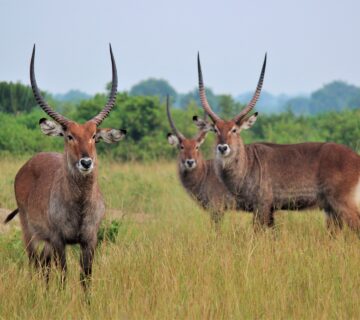
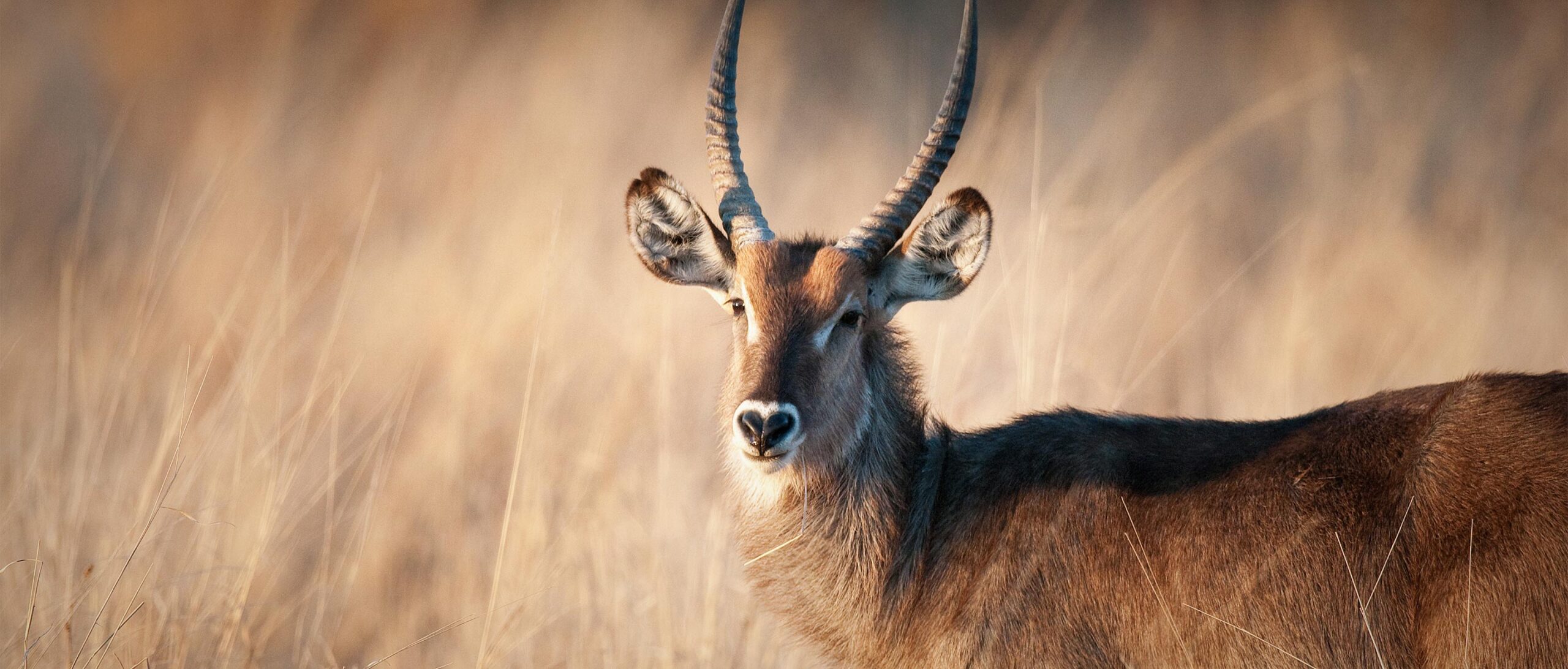
The waterbuck is a large, robust antelope that you will see in almost every major park in Uganda. It is easy to recognise. Males have impressive, ringed horns that sweep backwards in a graceful curve. Both sexes have a distinctive white ring on their rumps, which has earned them the nickname “toilet seat” among some safari guides. It is not the most flattering name, but it is memorable.
Their coats are shaggy and range from greyish-brown to reddish-brown. They are not the most elegant antelope on the savannah, but they have a certain rugged charm. They are built for endurance, with strong legs and a sturdy frame that helps them navigate the wetlands and grasslands they call home.
So, What Is That Smell?
The smell comes from a secretion produced by glands in the waterbuck’s skin. It is a greasy, oily substance that coats the fur, and it has a strong, pungent odour that many people describe as musky or similar to turpentine. You do not have to be right next to a waterbuck to notice it. On a calm morning, the wind can carry the scent across the plains, and it lingers in the air long after the animal has moved on.
The secretion is produced all over the body, but it is particularly concentrated on the neck and shoulders. It is most noticeable in males, though females also produce it. The intensity of the smell varies depending on the individual and the season, but it is always present.
Why Do They Smell?
Now we get to the interesting part. That strong odour is not a design flaw. It is a weapon.
Predator Deterrent
The primary purpose of the smell is to keep predators away. Lions, leopards, and hyenas rely heavily on their sense of smell when hunting. A waterbuck that reeks of strong, oily musk is less appealing as a meal. The smell is off-putting, and in some cases, it may even mask the waterbuck’s natural scent, making it harder for predators to track.
There is also evidence that the secretion has a slightly toxic quality. It is not deadly, but it can cause mild irritation if it gets into a predator’s eyes or mouth. A lion that has bitten into a waterbuck might think twice before doing it again.
Communication and Social Signalling
The smell is also a form of communication. Waterbucks use scent to mark their territories and to signal their presence to other waterbucks. Males, in particular, rub their necks and shoulders against bushes and trees, leaving behind their distinctive odour as a way of saying, “I was here. This is my patch. Stay away.”
The secretion also helps waterbucks recognise each other. It serves as a kind of olfactory fingerprint, allowing individuals to identify family members, potential mates, and rivals.
Does the Smell Really Work?
The short answer is yes, but it is not a foolproof defence. Lions and other predators will still hunt waterbucks, especially if they are hungry or if other prey is scarce. However, waterbucks are not the preferred prey of most large carnivores. They are often the last choice on the menu, and their smell is a big reason why.
In areas where waterbucks and predators coexist, you will notice that lions tend to target other species first. They will go after kobs, buffalo calves, and warthogs before they turn their attention to the waterbuck. It is not that waterbucks are invincible, but that smell gives them an edge, a layer of protection that other antelope do not have.
Where to See Waterbucks in Uganda
Waterbucks are widespread in Uganda, and they are one of the easiest antelope species to spot. They are not shy, and they often graze in open areas near water.
Queen Elizabeth National Park
This is the best place for waterbuck sightings. They are everywhere along the Kazinga Channel and the shores of Lake Edward. The Kasenyi Plains also have healthy populations. You will almost certainly see them on a boat launch or a game drive.
Murchison Falls National Park
Waterbucks are common here, particularly along the banks of the Nile and in the savannah grasslands on the northern bank. They are often seen grazing in small herds near the river, alongside kobs and buffalo.
Lake Mburo National Park
Lake Mburo is a smaller park, but it has a good population of waterbucks. They are frequently seen around the lake shores and in the open grasslands. The park’s compact size makes them easy to find.
Kidepo Valley National Park
Kidepo is more remote, but it is home to a healthy population of waterbucks. The Narus Valley, in particular, is a good place to look.
Behaviour and Habits
Waterbucks are gregarious animals. They form herds that can range from a few individuals to over thirty. The herds are usually made up of females and their young, with a dominant male guarding the group. Bachelor males form their own smaller groups until they are strong enough to challenge for dominance.
They are never far from water. As their name suggests, waterbucks are closely tied to wetlands, rivers, and lakes. They drink regularly and rely on the lush vegetation that grows near water sources.
They are active during the day, though they tend to rest during the hottest hours. Early mornings and late afternoons are the best times to see them moving and grazing.
The Smell Is a Feature, Not a Bug
The next time you are on safari and the wind shifts, carrying that unmistakable musky scent, do not wrinkle your nose in disgust. Pause. Breathe it in. That smell is millions of years of evolution at work. It is an antelope that figured out how to make itself unappetising without running away or growing bigger teeth.
And in a world where predators are always watching, where every meal is a gamble, that is a pretty impressive survival strategy.
Final Thoughts
The waterbuck may not have the grace of an impala or the grandeur of an eland, but it has something just as valuable. It has an identity. That smell sets it apart from every other animal on the savannah. It marks its territory, warns its rivals, and gives predators a reason to look elsewhere.
So when you see a waterbuck standing by the water, its coat glistening in the sun, take a moment to appreciate it. Not just for what it is, but for how it has survived. And if you catch a whiff of that distinctive odour, you are not smelling a dirty animal. You are smelling a survivor.