African Civet: The Nocturnal Carnivore on Uganda’s Night Drive
There is a moment on every night drive when the spotlight sweeps across the bush and catches a pair of eyes, glowing like embers in the darkness. Your heart skips. You lean forward, straining to see what is out there. And then, just as quickly as it appeared, the animal is gone, melting back into the shadows before you can get a proper look.
That is the African civet for you. It is elusive, secretive, and utterly captivating. It is not the biggest predator on the savannah, and it certainly is not the most famous. But it has a charm that is all its own, a quiet mystery that draws you in and makes you want to know more.
What Is an African Civet?
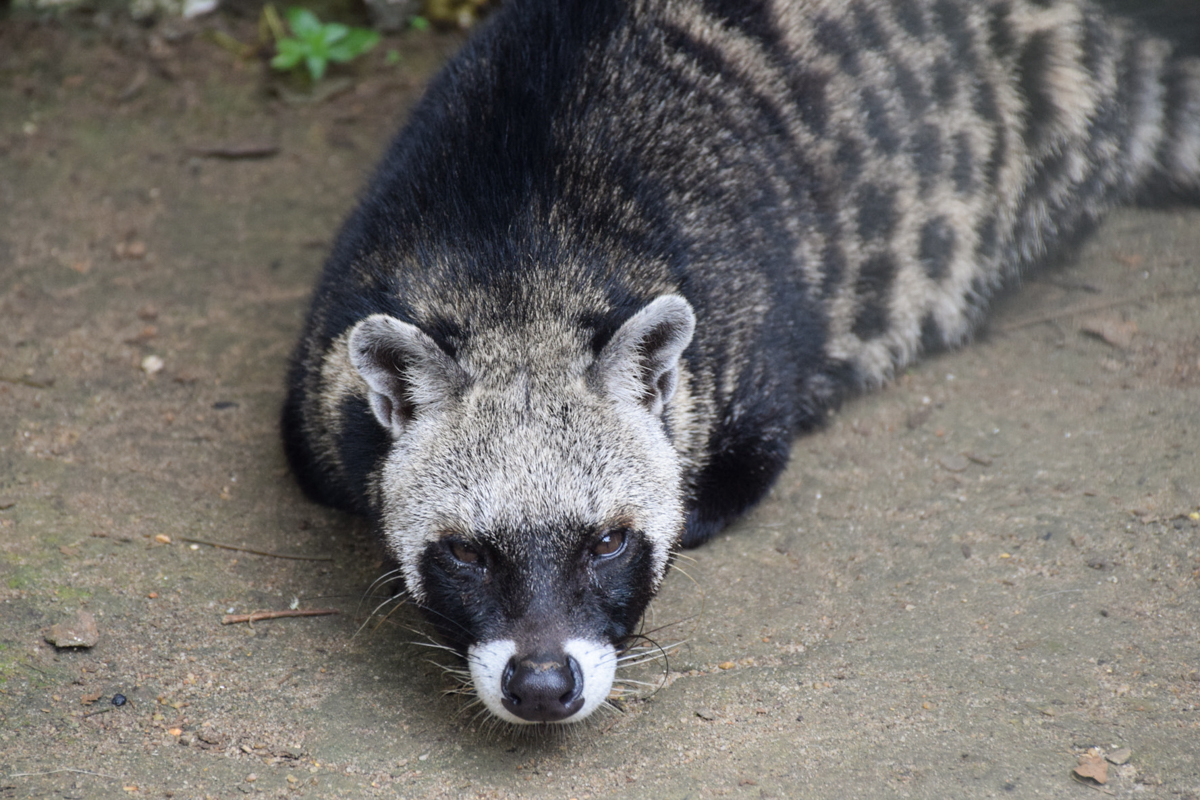
The African civet is a nocturnal carnivore that looks like a strange hybrid of a cat, a dog, and a raccoon. It has a long, stocky body, short legs, and a face that is distinctly cat-like. Its coat is greyish with striking black spots and stripes that form a bold pattern along its back and flanks. The tail is ringed with black and white, and it holds it upright like a flag as it moves through the grass.
It is about the size of a small dog, weighing between seven and twenty kilogrammes. Its most distinctive feature is its crest, a dark mane of hair that runs along its back and stands erect when the animal is alarmed. This crest gives it a dramatic, almost prehistoric appearance.
The civet is also famous for its scent glands. It produces a musky secretion that has been used for centuries in perfumes. This secretion is called civetone, and it is one of the most valuable animal-derived scents in the world. The civet uses these glands to mark its territory, leaving behind a strong, unmistakable odour that warns other civets to stay away.
Behaviour: A Life in the Shadows
The African civet is strictly nocturnal. It spends its days resting in dense vegetation, hidden from the sun and from predators. As dusk falls, it emerges from its hiding place and begins its nightly patrol. It moves with a slow, deliberate gait, pausing frequently to sniff the air and listen for danger.
It is an omnivore, and its diet is as varied as its habitat. It feeds on small mammals, birds, reptiles, insects, and fruits. It is also known to eat carrion, and it will raid farms and villages for poultry and other domestic animals. This adaptability is one of its greatest strengths, allowing it to survive in a wide range of habitats.
Despite its size, the civet is not a particularly aggressive predator. It prefers to avoid confrontation, using its stealth and its keen senses to hunt and forage. When threatened, it will raise its crest, hiss loudly, and release a foul-smelling secretion from its scent glands. This is usually enough to deter most predators.
What Makes the African Civet Special?
There is something about the African civet that sets it apart from other nocturnal animals. It is not just its strange appearance or its secretive habits. It is the way it moves through the night, silent and watchful, like a ghost in the grass.
For centuries, the civet has been a part of African folklore. It is often portrayed as a trickster, a cunning animal that uses its intelligence to outwit its enemies. In some cultures, it is seen as a symbol of mystery and hidden knowledge. Its ability to move unseen through the darkness has given it an aura of magic, a sense that it belongs to a world that humans can never fully understand.
Where to See African Civets in Uganda
The African civet is widespread in Uganda, but it is not easy to see. Its nocturnal habits and secretive nature make it a challenging sighting. However, there are a few places where your chances are good.
Queen Elizabeth National Park
Queen Elizabeth is one of the best places for night drives in Uganda. The park’s varied habitats, including savannah, woodland, and riverine forests, provide ideal conditions for civets. They are most commonly seen in the northern sectors of the park, including the Kasenyi Plains and the area around the Kazinga Channel.
The best time to see them is during a night drive, when the park is quiet and the animals are active. Your guide will use a spotlight to scan the bush, looking for the telltale glow of eyes in the darkness. It takes patience, but the reward is worth it.
Murchison Falls National Park
Murchison Falls has a healthy population of African civets. They are found throughout the park, but they are most commonly seen on the northern bank of the Nile. The woodland and savannah habitats here are perfect for them.
Night drives in Murchison are a fantastic experience. The park’s vast, open landscapes make it easier to spot animals, and the civets are just one of the many species you might encounter.
Kidepo Valley National Park
Kidepo is more remote, but it is also one of the best places for wildlife viewing in Uganda. The park’s open plains and woodlands provide good habitat for civets, and the animals here are less disturbed. Night drives in Kidepo are a must-do, offering the chance to see civets, genets, and other nocturnal species.
Tips for Spotting African Civets
Go on a night drive. This is the most reliable way to see civets. They are nocturnal, and they are much easier to spot after dark. Most parks in Uganda offer night drives, and they are well worth the extra cost.
Look for eyeshine. Civet eyes reflect the light of a spotlight, creating a bright, glowing effect. This is often the first sign that a civet is nearby. Once you see the eyeshine, you can focus your attention on that spot and wait for the animal to reveal itself.
Be patient. Civets are shy and easily spooked. If you approach too quickly or too noisily, they will disappear into the bush. Your guide will know how to approach slowly and quietly, giving you the best chance of a sighting.
Listen for sounds. Civets make a range of vocalisations, including growls, hisses, and chattering sounds. If you hear something rustling in the bush, it could be a civet.
A Night with the Civets
The sun has set over Queen Elizabeth, and the park has transformed. The daytime animals have retreated, and the nocturnal world is waking up. Your vehicle moves slowly along the track, the spotlight sweeping across the bush. The air is cool, and the only sounds are the hum of the engine and the distant calls of hyenas.
Your guide stops suddenly. He points into the darkness. There, in the beam of the spotlight, is a pair of glowing eyes. They belong to an African civet. It is standing at the edge of the road, watching you with quiet curiosity. Its coat is beautiful, a striking pattern of spots and stripes that seems to glow in the light.
The civet does not run. It stands there for a long moment, staring at you. Then, with a flick of its ringed tail, it turns and disappears into the bush. You are left with the memory of those eyes, those patterns, that fleeting glimpse of a creature that belongs to the night.
Why the Civet Matters
The African civet is not endangered, and it is not a flagship species. But it matters. It is a vital part of Uganda’s ecosystems, helping to control populations of small mammals and insects. It is also a seed disperser, eating fruits and spreading the seeds across the landscape.
Its presence is a sign of a healthy ecosystem. When civets are present, it means there is enough food, enough cover, and enough space for them to thrive. It means the habitat is intact.
Tourism matters for the civet too. Night drives are a major draw for visitors, and the revenue they generate supports conservation. When people come to see civets, they fund anti-poaching patrols, habitat management, and community programmes. They give the civet a value, a reason to protect it.
Final Thoughts
The African civet is a creature of the night. It moves through the darkness with a quiet grace, a ghost in the grass. It is not easy to see, and it is not easy to understand. But that is part of its appeal. It is a mystery, a secret that the night keeps close.
When you finally see one, you will understand why it is so special. It is not a lion. It is not a leopard. But it is wild, truly wild, and that wildness is something to cherish.
So on your next trip to Uganda, book a night drive. Scan the bush with the spotlight. Look for those glowing eyes in the darkness. And when you see a civet, take a moment to appreciate it. You are looking at one of the savannah’s most fascinating creatures, a predator of the night that has been here long before we ever arrived.