Side-Striped Jackal in Uganda: Behaviors and Best Spotting Locations
There is something about the side-striped jackal that makes you do a double take. It is not as famous as its cousin, the black-backed jackal, and it certainly does not have the star power of a lion or a leopard. But it has a quiet, understated charm that rewards those who take the time to look. It moves through the shadows with a stealthy grace, its eyes gleaming in the half-light, and when you finally see one, you realise you have been missing out on one of Uganda’s most fascinating predators.
What Is a Side-Striped Jackal?
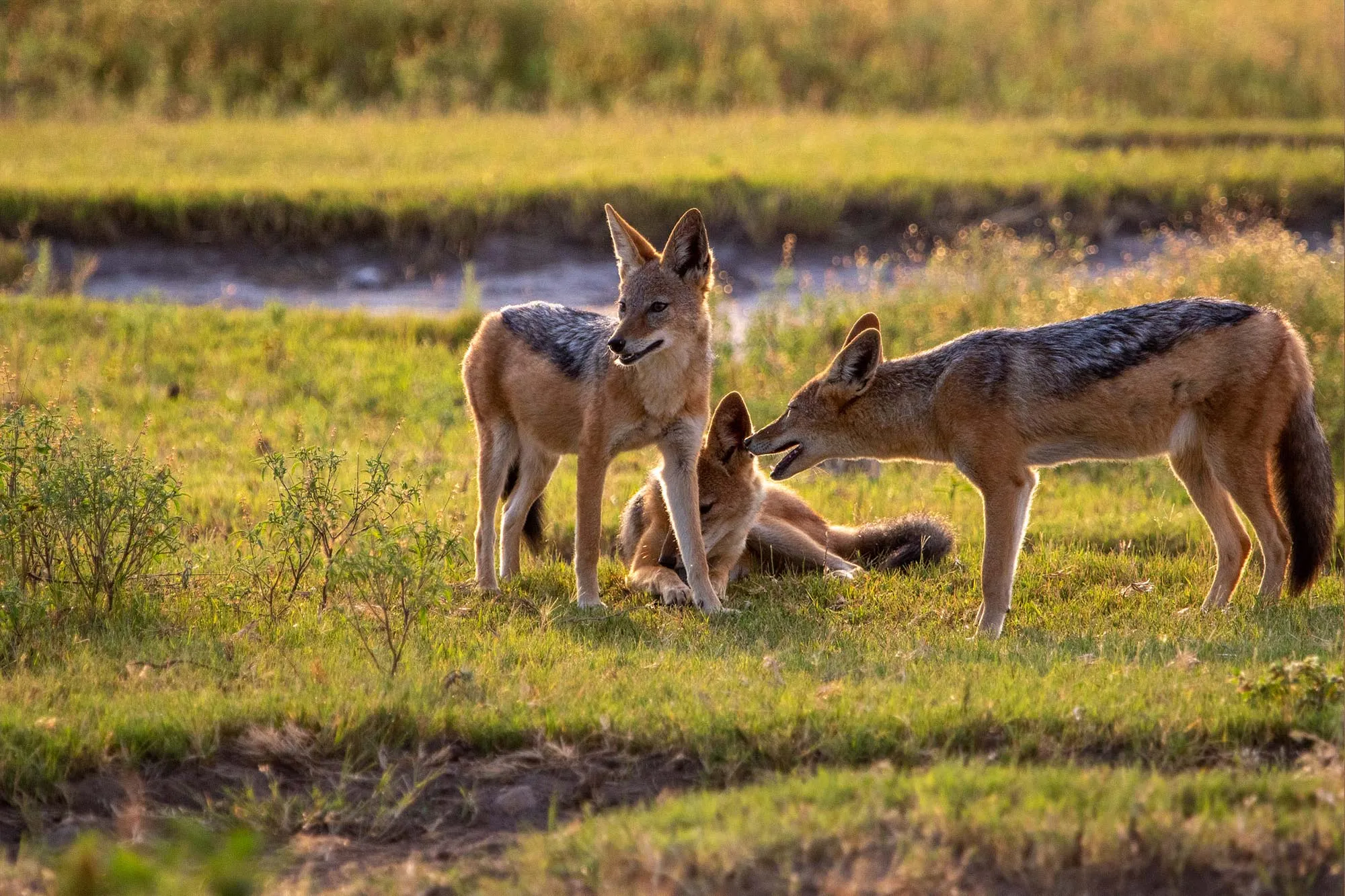
The side-striped jackal is a medium-sized canid, smaller than a wolf but larger than a fox. It stands about forty centimetres at the shoulder and weighs between seven and fourteen kilogrammes. Its coat is a grizzled greyish-brown, with a distinctive white stripe running along its flanks, bordered by black lines. This stripe gives the animal its name and makes it easy to identify, if you can get a good look.
Its tail is bushy, tipped with white, and its ears are large and pointed. Its face is more rounded than other jackals, with a softer, almost gentle expression. Do not be fooled by that gentle face. This is a skilled predator and a resourceful scavenger.
Where Does It Live?
The side-striped jackal is widespread across sub-Saharan Africa, but in Uganda, it is found in specific habitats. It prefers woodland, savannah, and bushland, avoiding the open plains that other jackals favour. It is also found in moist areas, including riverine forests and swamps. It is an adaptable animal, but it has its preferences.
Unlike the black-backed jackal, which is more common in East Africa, the side-striped jackal is less frequently seen. It is nocturnal and crepuscular, meaning it is most active at dawn, dusk, and during the night. This makes it harder to spot than the diurnal animals that dominate the game drives.
Behaviour: A Shy and Secretive Predator
The side-striped jackal is a shy and secretive animal. It avoids humans and will slip away into the bush at the first sign of danger. This makes it a challenging sighting, but it also makes the experience more rewarding when you finally see one.
It is a social animal, living in pairs or small family groups. The groups are monogamous, with a male and female forming a lifelong bond. They hunt together, forage together, and raise their young together. The pups are born in underground dens, and both parents take turns caring for them.
The side-striped jackal is an omnivore. Its diet is varied and includes small mammals, birds, reptiles, insects, and fruits. It is also a scavenger, feeding on carrion and leftovers from larger predators. This flexibility is one of its greatest strengths, allowing it to survive in habitats where other predators would struggle.
When hunting, the jackal uses its keen senses of hearing and smell to locate prey. It stalks quietly, then pounces with surprising speed. It is not a fast runner, but it is persistent. It will follow its prey until it tires, then move in for the kill.
Why Is It So Hard to Spot?
The side-striped jackal’s nocturnal habits are the main reason it is so difficult to see. Most game drives in Uganda take place during the day, when the jackals are resting in their dens or hiding in thick bush. Even when they are active, they are elusive. They move quietly, staying close to cover, and they are quick to retreat if they sense danger.
Their preferred habitats also work against them. Woodland and bushland are harder to scan than open plains. The jackal can disappear into the shadows in seconds, leaving you staring at an empty patch of grass.
But the effort is worth it. There is something special about seeing a side-striped jackal, something that feels like a secret shared between you and the wild.
Best Spotting Locations in Uganda
If you are determined to see a side-striped jackal, there are a few places in Uganda where your chances are best.
Queen Elizabeth National Park
Queen Elizabeth is one of the best places to see side-striped jackals in Uganda. The park’s varied habitats, including woodland, savannah, and riverine forests, provide ideal conditions. The jackals are most commonly seen in the northern sectors of the park, including the Kasenyi Plains and the area around the Kazinga Channel.
The best time to spot them is early morning or late afternoon, when they are still active. Look for them near water sources, where they come to drink and forage. A night drive in Queen Elizabeth is also a good option, as the jackals are more active after dark.
Murchison Falls National Park
Murchison Falls has a healthy population of side-striped jackals. They are found throughout the park, but they are most commonly seen on the northern bank of the Nile. The woodland and savannah habitats here are perfect for them.
The best areas to look are the open grasslands near the river and the thicker bushland further north. As with Queen Elizabeth, early morning and late afternoon are the best times for sightings.
Kidepo Valley National Park
Kidepo is more remote, but it is also one of the best places for jackal sightings. The park’s open plains and woodlands provide good habitat, and the jackals here are less disturbed. The Narus Valley is a good place to look, though you will need to be patient. Kidepo is a big park, and the jackals are not everywhere.
Tips for Spotting Side-Striped Jackals
Go on a night drive. This is the most reliable way to see side-striped jackals. Most parks in Uganda offer night drives, and they are a fantastic opportunity to see nocturnal wildlife. The jackals are active after dark, and they are less wary of vehicles at night.
Look near water. Jackals need water daily, so they are often found near rivers, lakes, and waterholes. Scan the edges of water sources in the early morning and late afternoon.
Listen for calls. Side-striped jackals have a distinctive call, a series of high-pitched yelps and howls. If you hear them, they are nearby. Follow the sound, but do so quietly.
Be patient. You are looking for a shy, nocturnal animal in a vast landscape. It takes time. Do not give up after a few minutes. Spend time in the right areas, and you will eventually be rewarded.
Why the Side-Striped Jackal Matters
The side-striped jackal is not endangered, and it is not a flagship species. But it matters. It is a vital part of Uganda’s ecosystems, helping to control populations of small mammals and insects. It is also a scavenger, cleaning up carcasses and preventing the spread of disease.
Its presence is a sign of a healthy ecosystem. When jackals are present, it means there is enough food, enough cover, and enough space for them to thrive. It means the habitat is intact.
Tourism matters for the side-striped jackal too. When visitors come to see them, they bring revenue that supports conservation. They fund anti-poaching patrols, habitat management, and community programmes. They give the jackal a value, a reason to protect it.
A Quiet Encounter
You are on a night drive in Queen Elizabeth. The sky is dark, and the stars are out. Your guide drives slowly, scanning the bush with a spotlight. The air is cool, and the only sounds are the hum of the engine and the distant calls of hyenas.
And then you see them. Two pairs of eyes, glowing in the darkness. They belong to a pair of side-striped jackals, hunting together on the edge of the road. They are focused, moving with purpose, their tails held low. They do not seem to notice you, or if they do, they do not care.
You watch them for a long time. They work together, flushing out small prey and chasing it through the grass. It is a quiet, intimate moment, a glimpse into a world that most visitors never see.
Eventually, they move on, disappearing into the night. You are left with the memory of those glowing eyes and the soft pad of their feet on the dry earth.
Final Thoughts
The side-striped jackal is not the easiest animal to see in Uganda. It is shy, nocturnal, and elusive. But that is part of its appeal. It is a creature of the shadows, a secretive predator that rewards patience and persistence.
When you finally see one, you will understand why it is so special. It is not a lion or a leopard. It does not pose for photos or perform for the crowds. But it is wild, truly wild, and that wildness is something to cherish.
So on your next trip to Uganda, take the time to look for the side-striped jackal. Go on a night drive. Scan the bush. Listen for its call. And when you finally see those glowing eyes in the darkness, you will know that you have earned it.